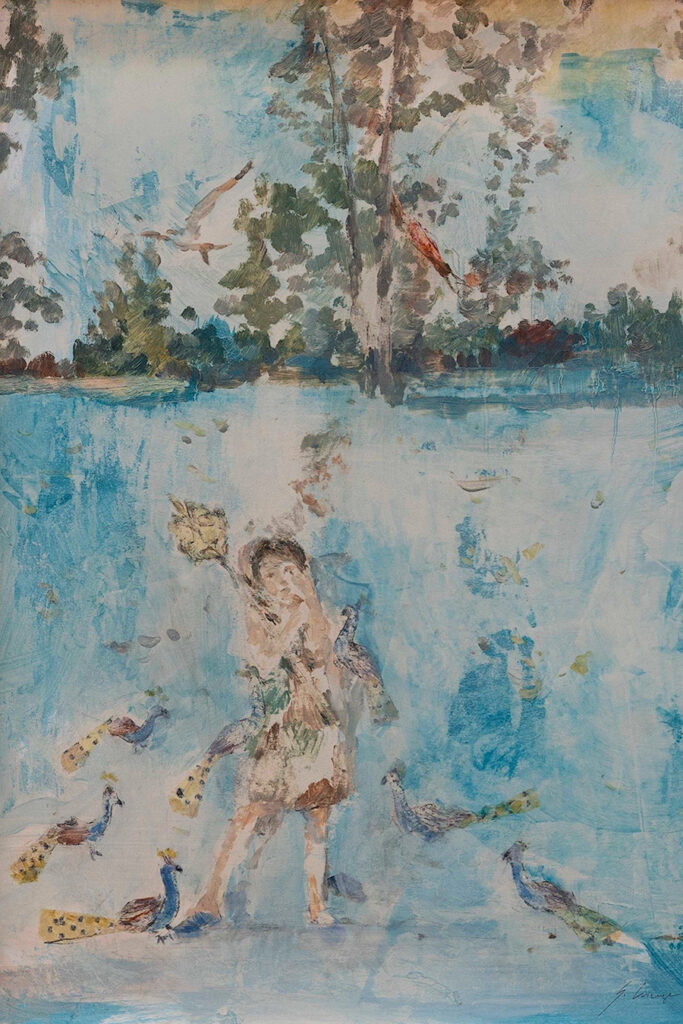
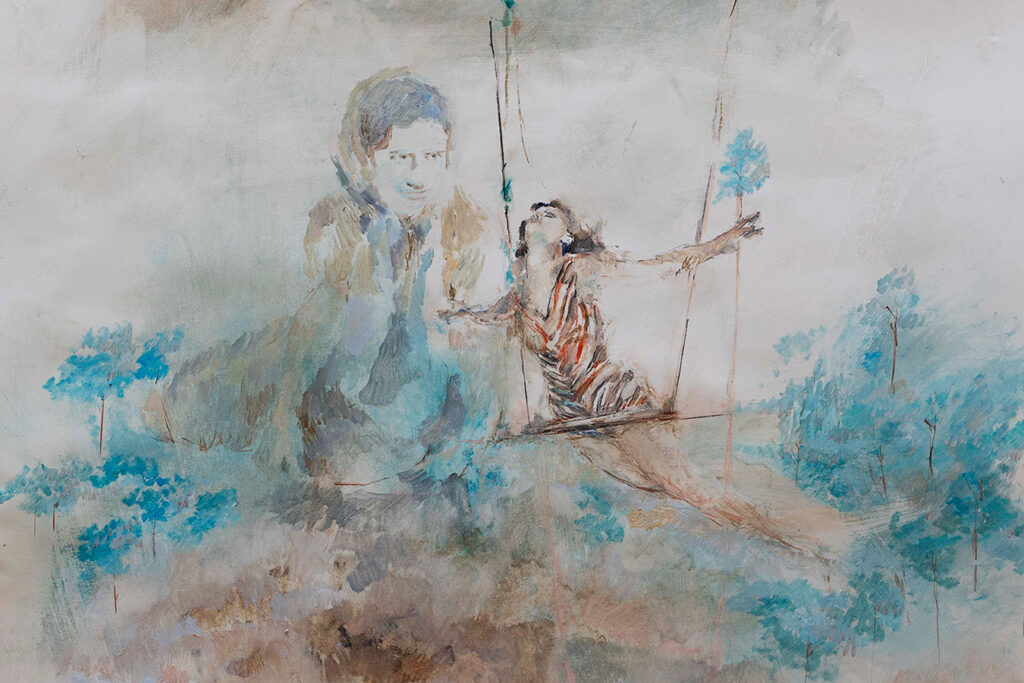
Gloria Loizaga es una pintora que nos recuerda que la creación es también una forma de revelación.
(The English version of this interview is provided below the Spanish version.)
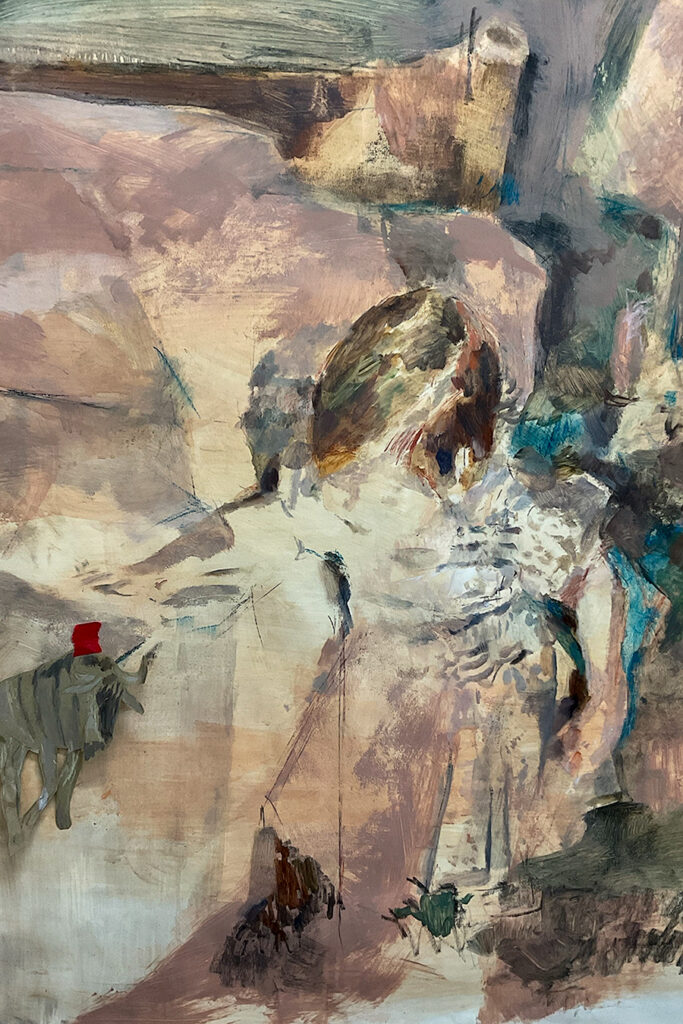
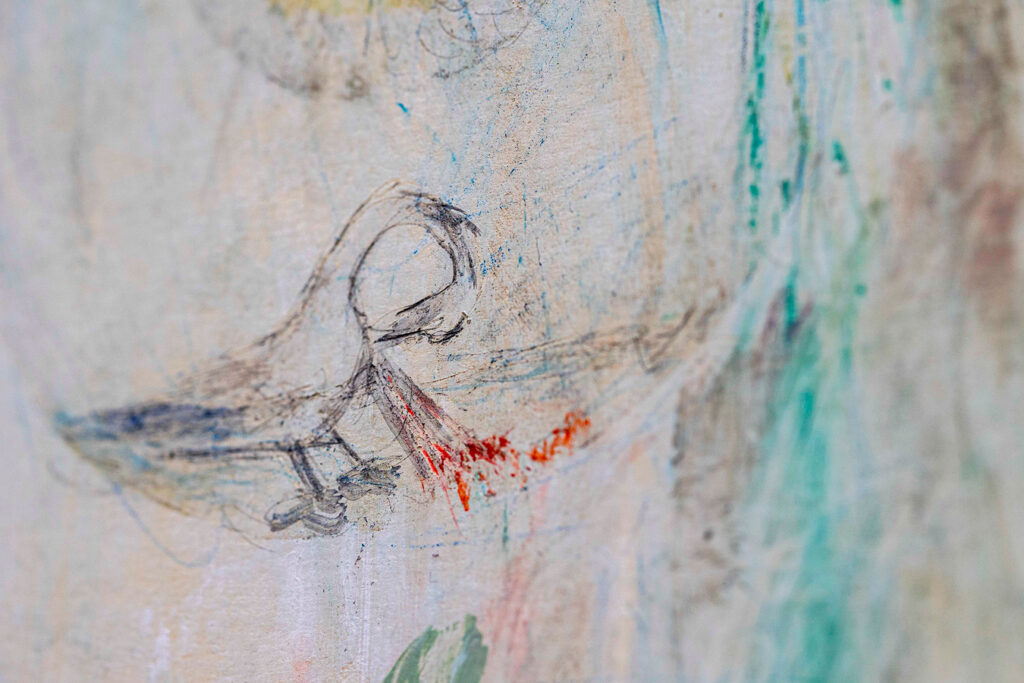
Todas la imágenes © Gloria Loizaga, todos los derechos reservados. No utilizar sin autorización escrita.
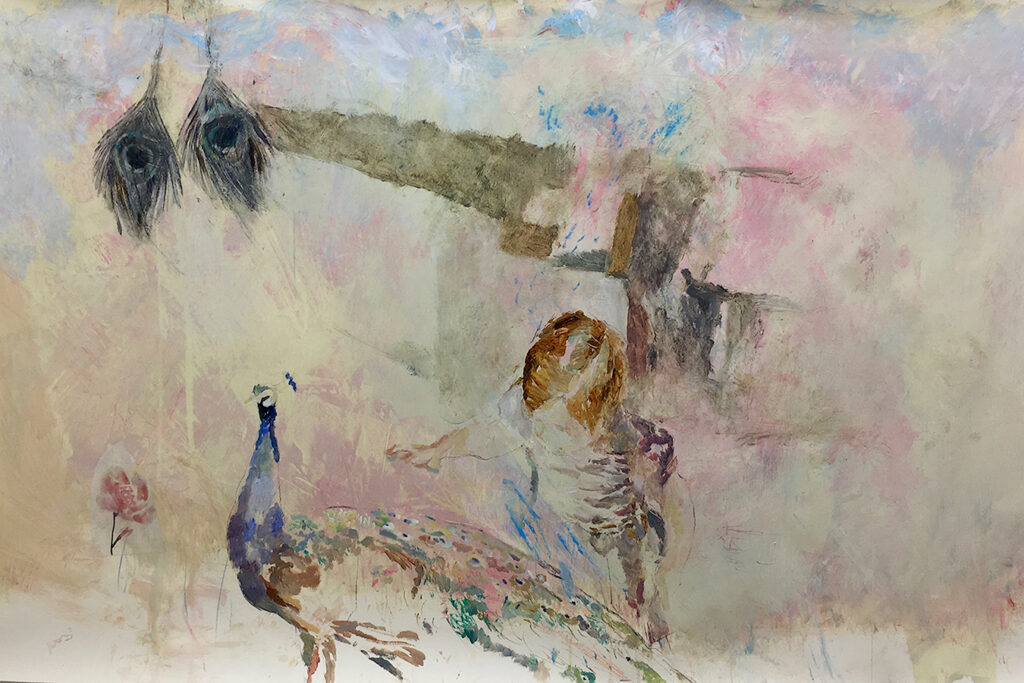
Introducción
Entre lo que se ve y lo que se siente, hay un umbral sagrado. Allí habita el arte: no como objeto, sino como experiencia, como presencia viva que respira a través del alma de quien crea.
En este encuentro, nos asomamos al universo íntimo de Gloria Loizaga, una pintora cuya obra no solo se contempla, sino que se escucha con el corazón abierto.
A través de sus palabras, como a través de sus trazos, vamos deshilando capas de sentido, de memoria, de símbolo. Nos dejamos guiar por preguntas que no buscan respuestas inmediatas, sino comprender su mundo íntimo. Cada una de sus respuestas es un eco de algo más profundo, un trazo invisible que nos invita a volver a lo esencial: al gesto que nace desde dentro, a la materia que se deja tocar por el espíritu.
Gracias Gloria por abrirnos la puerta de tu mundo interior, por dejarnos caminar contigo por los senderos donde nace la imagen antes de ser imagen, y el símbolo antes de ser dicho.
Que esta entrevista no sea solo lectura, sino también semilla: una ofrenda para quien se acerque con el corazón despierto.
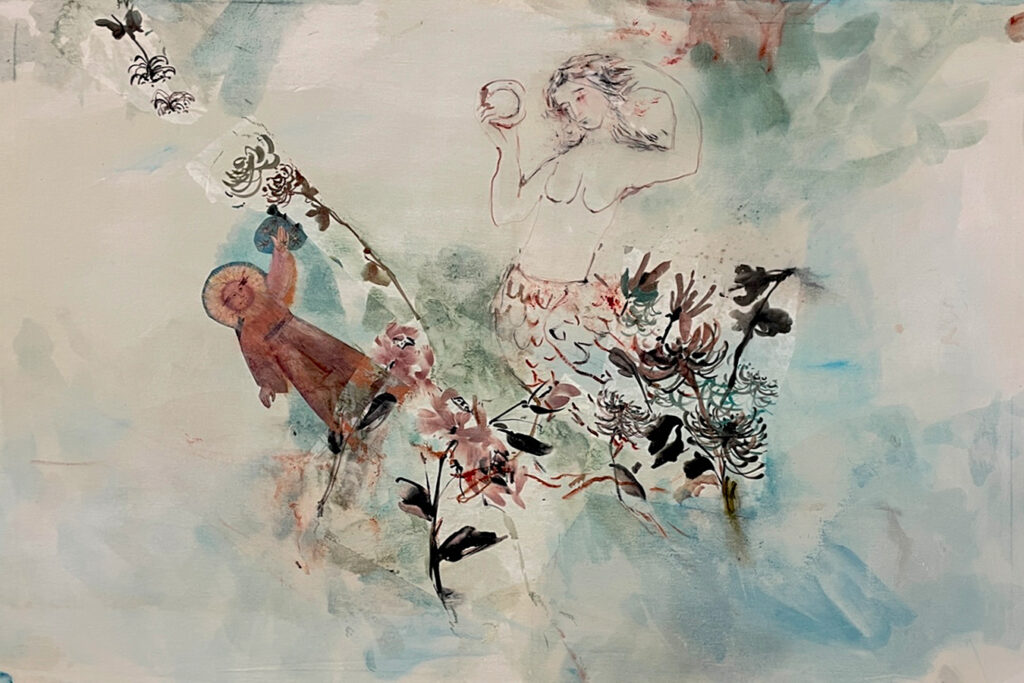
I. Raíces del Alma Creativa
¿Recuerdas el primer momento en que el arte tocó tu corazón, como si reconocieras algo profundo en ello, algo que ansiabas descubrir?
Recuerdo la primera vez que fui consciente de lo que producía en mí el pintar. Algo que hacia desde niña y durante todo el colegio, pero fue a los 16 años, un domingo, pintando a Merlín y a la dama del lago cuando experimenté, me atrevo a decir que, algo nuevo. No solo estuve fuera del tiempo, también experimenté la ligera ansiedad que produce el momento de creación en el que las cosas están aún por manifestarse. Fue la semilla de la consciencia del también lado oscuro de la creación.
¿Hay algún eco de tu infancia, alguna semilla artística sembrada hace tiempo, que floreció más tarde como un lenguaje artístico para expresar tus emociones?
Mi padre era un amante de los libros, la música y la pintura. Desde niña me hizo partícipe de sus pasiones y la verdad que fue una verdadera suerte. El ojo se fue educando y, sobre todo, comencé a tener afinidad con diferentes estilos. Desde niña el surrealismo y las imágenes que parecían frontera entre lo real y la fantasía me atrapaban totalmente. Me pareció que la pintura, la fotografía… mostraban otras realidades posibles y si, quizás esa semilla se quedó ahí, silenciosa, esperando el momento adecuado para crecer.
¿Sientes que fuiste tú quien eligió el camino del arte, o más bien, fue el arte quien, en silencio y con sabiduría, te eligió a ti?
Pues a día de hoy me atrevo a afirmar que el arte me eligió a mí. Estudie Bellas artes pensando en hacer historia del arte especializarme en arte oriental. Pero enseguida descubrí que era una carrera para darlo todo, y aunque no siempre me he dedicado profesionalmente solo a la pintura, lo cierto es que el arte tiñe la realidad y la manera de relacionarnos con todo.
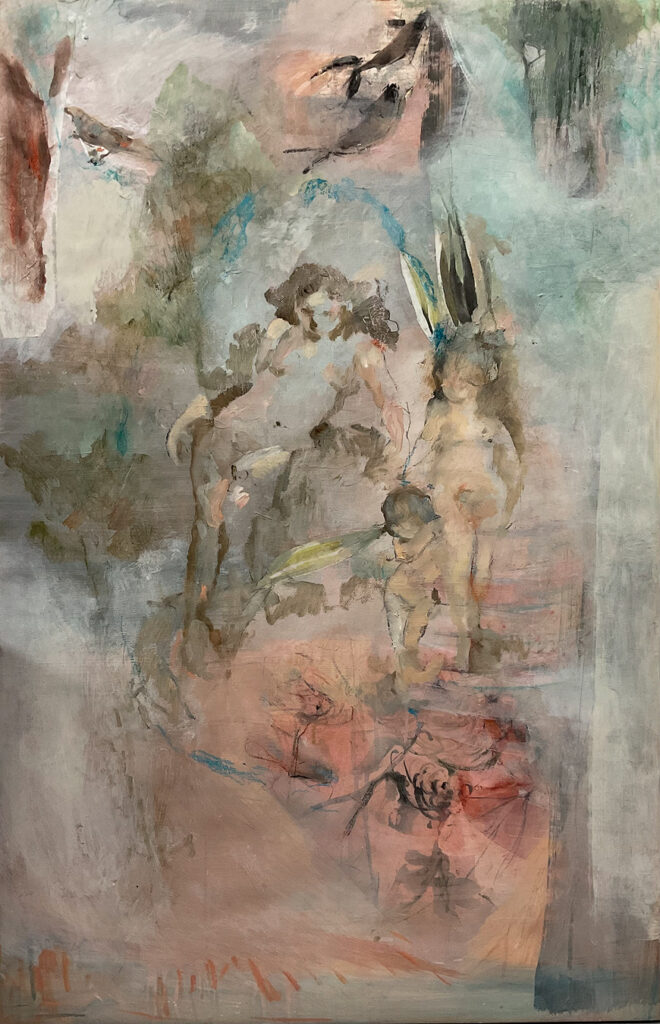
II. Ecos y Resonancias
¿Qué voces del pasado, qué susurros de aquellos que han caminado antes que tú, resuenan en tus manos cuando pintas?
Claramente resuena Giacometti con su infinidad de líneas para dibujar la materia, como si captase que no tenemos una forma definida y que todo está en movimiento. Odilon Redon, pintor simbolista, es mi pintor de cabecera, su valentía para ser el mismo y pintar como él veía y sentía, muy diferente a lo que ocurría en el mundo del arte en su tiempo. Y la determinación de Van Gogh, ajeno a los resultados y a la opinión de los otros, se mantuvo fiel a la pintura, llamado hasta el final a pintar sin descanso.
¿Qué maestros espirituales, más allá del arte, han nutrido tu mirada y te han guiado en el camino de la contemplación?
El camino de la contemplación ha estado en mi vida desde siempre. Camuflado por la meditación trascendental y de visualización, de carácter más hindú, perfecto para alguien con una imaginación desbordante y una mente muy inquieta y densa. Así que mis maestros son todos aquellos que de manera sencilla y directa expone que la realidad no es una limitación para el ser.
Aparte de lo visual, ¿Qué otros lenguajes —como la música, los sueños, o el silencio profundo— nutren tu mundo interior, ese vasto universo simbólico que habita en ti?
La música es un elemento fundamental en mi vida. Si bien es cierto que el silencio tiene un carácter más rotundo. El eco del vacío permite que aflore lo más inesperado y desconocido de mi interior. A veces genera impaciencia, tiene un tempo muy relativo… la música marca el ritmo de las pinceladas y el silencio es como una espera sin claves concretas.
III. Materia y Misterio
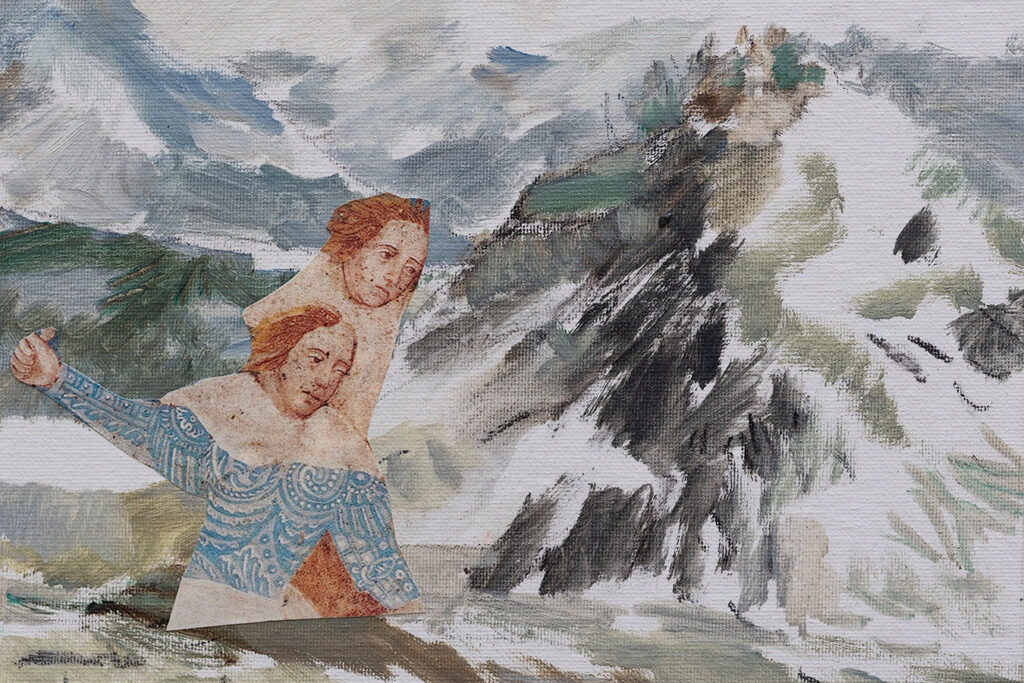
Tus obras descansan sobre materiales diversos: papel, madera, tela… ¿Cómo te conectas con la materia antes de que se convierta en expresión?
Personalmente he mantenido una constante lucha con la materia, como si fuese algo pesado, molesto e incómodo. No importa con cuanta materia pinto, que no se plasma. El silencio y la contemplación están recolocándome con respecto al cuerpo y la materia. Hoy puedo decir que que ambas son para mí sagradas.
Elijo cuidadosamente los materiales y en diferentes épocas los soportes han determinado la expresión. Suelo tocar y aplicar la pintura con las manos en ciertos momentos para que la luz y el color se fundan con la materia. Superpongo elementos para que emerja lo inesperado.
¿Hay un encuentro, una danza entre lo visible y lo invisible en ese momento previo a la creación?
Sin duda. No es premeditado; empiezo a poner, es como tomar un camino y algo dentro me hace recalcular el recorrido. Y así l hago sin miedo a borrar y a empezar de nuevo; es la única manera de lo invisible se manifieste.
En la mezcla de técnicas, ¿encuentras libertad, alquimia, o tal vez un espacio de contemplación pura donde la forma se disuelve y emerge el ser?
Todo a una. Alquimia sería una definición perfecta. Tiene algo de experimental por lo inesperado del resultado, incluido el fracaso.
Tus colores son como susurros, como oraciones silenciosas. ¿Qué lugar ocupa el vacío, la luz tenue, el espacio entre lo que está y lo que no está, en tu universo pictórico?
La paleta no es algo que determine; de hecho, cambio según el momento vital. Cuando elijo el color, muchas es veces es diferente a como acaba siendo en el lienzo. Es realmente asombroso y es ahí donde sucede el misterio. Aparece una luz que ni yo vislumbro.
IV. Alegoría, Símbolo y Espíritu
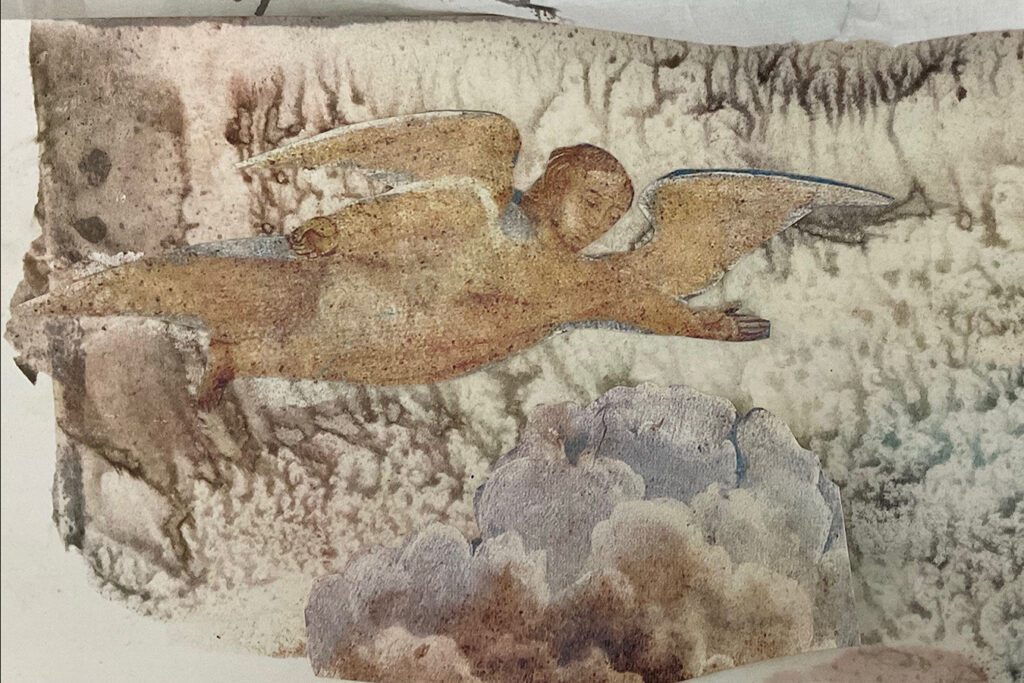
Tu obra parece hablar desde un lugar más allá de lo visible, como un eco que resuena en el corazón. ¿Qué significa para ti lo simbólico?
El espíritu es mi energía vital. De ahí parte mi determinación para casi todo en la vida. Y el símbolo es para mí una transmisión que se escapa a la razón, incluyéndola y trascendiéndola.
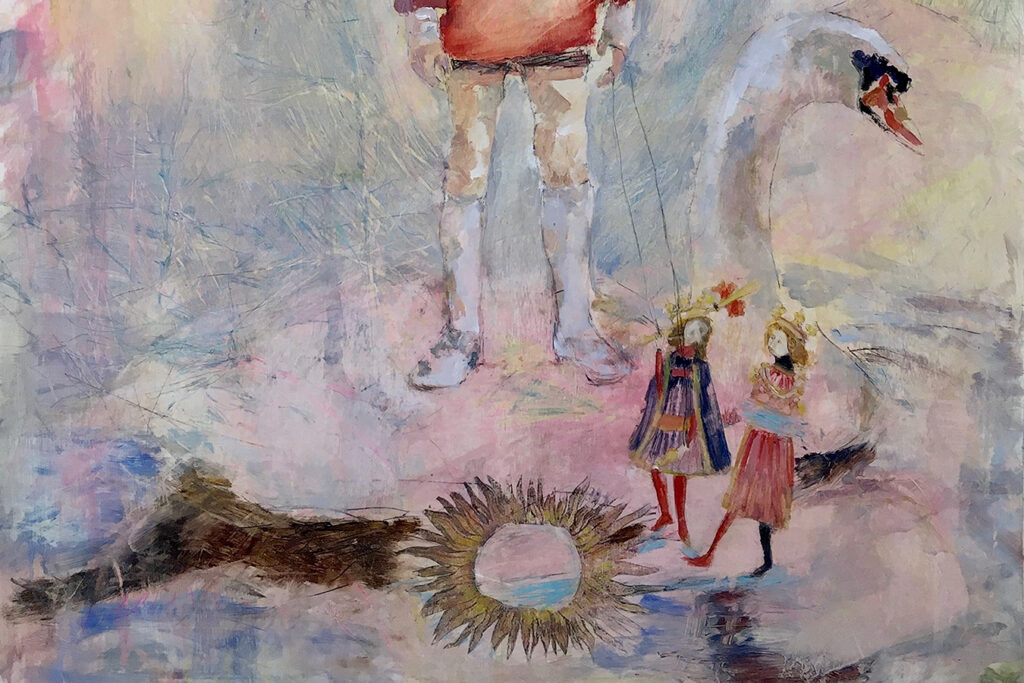
Son imágenes, alegorías, que emergen del inconsciente. En muchos casos están inspiradas en motivos alquímicos y otras son como ensoñaciones, elementos que se revelan y me oriento impulsada a darles voz.
Los símbolos que surgen en tus cuadros, ¿emergen desde tu ser interior o parecen venir a ti, como algo que ya estaba esperando ser revelado?
No lo había pensado. Siento que cultivo la escucha a mi ser interior para que transmita algo que esperaba ser revelado. Pero no siento que sea propio.
¿Buscas revelar un sentido, o prefieres dejar que el alma del espectador encuentre su propio camino hacia la verdad, como una flor que se abre en su propio tiempo?
El espectador completa la obra con su mirada. Y la obra es algo abierto. Yo pongo intención de generar ese vacío que permite que cada uno se puede mirar como en un espejo.
V. Ritmos Internos
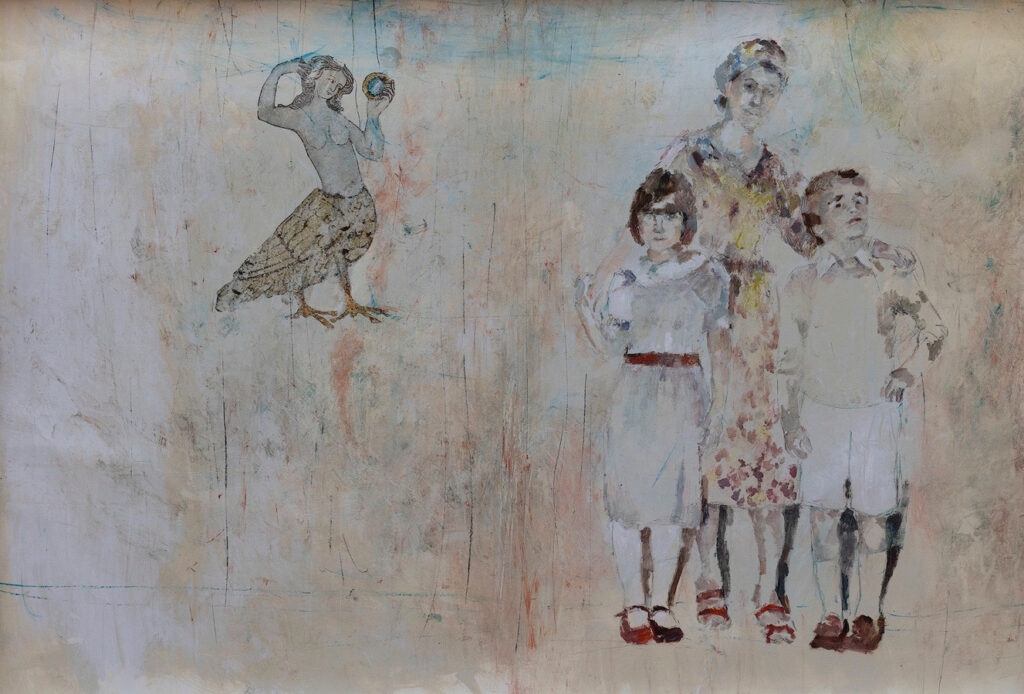
¿Cómo nace una obra en ti? ¿Hay un momento de quietud, casi sagrado, en el que todo se alinea y el gesto surge sin esfuerzo?
Es quietud e inquietud casi a partes iguales. Dalí decía que un cuadro o era muy fácil o era imposible, y tenia toda la razón. Cuando sale a la primera tiene una frescura que procuro no estropear, es complicado saber cuando parar. A veces es muy claro pero cuando no lo es, la otra opción es llevarlo al extremo y que del propio caos salga algo nuevo y fresco o una porquería. Pero hay que arriesgar y jugártela. El punto de inflexión es que la obra este viva. No tengo problema en empezar de nuevo por muchas horas de trabajo que lleve, se que parchear no lleva a ningún sitio y es preferible empezar de cero.
Pero mantengo que en la pintura todo suma. Las horas nunca son perdidas; se suman silenciosamente surgiendo un soporte invisible y lleno de contenido eterno, pero más veraz que muchas realidades.
¿Tu proceso es más intuición que pensamiento, más escucha que acción?
Es una mezcla. Tengo que tener cuidado porque cuando entro en acción me precipito y, a veces, arraso con todo. Pero es que no se puede quedar uno atrás. No hay que tener miedo a ese caos. Del caos ordenado salen las mejores obras. El caos es el principio creador.
¿Es el silencio quien guía tu mano, como una meditación silenciosa en la que todo se revela?
El silencio gesta el no tiempo y la escucha real. Es como un cargar la batería o calmar la sed con agua de la buena.
¿Qué deseas despertar en quien contempla tus obras? ¿Una emoción profunda, una memoria olvidada, o un espacio para la reflexión silenciosa, para el despertar interior?
Deseo que cada cual encuentre lo que necesite, que la obra este viva y se complete con la mirada de cada quien. Un espejo de lo mas profundo del ser, una realidad amable, un descanso…una puerta a lo invisible, al misterio, pero de manera sencilla e iluminada.
VI. Caminos Abiertos
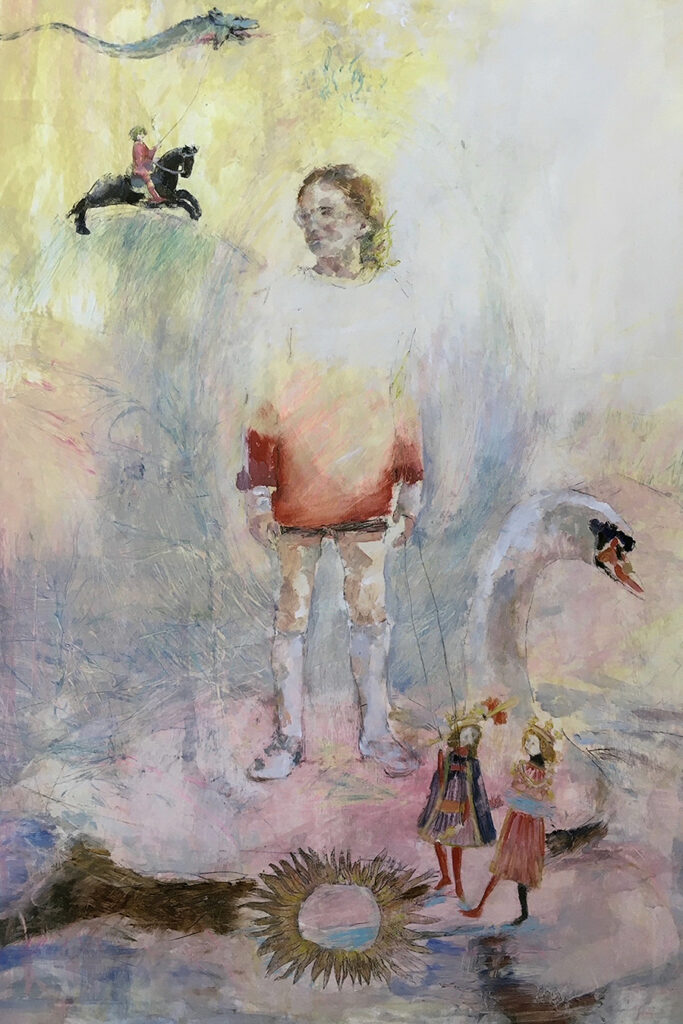
¿Sientes que tu pintura sigue un camino hacia nuevas formas, o que se va volviendo cada vez más esencial, como un retorno a la simplicidad profunda del ser?
Es curioso que hace pocos días encontré un trabajo de la facultad que hacia referencia a la vuelta al uno. Y mi propósito al pintar no difiere mucho del actual, la diferencia es que entonces mi propuesta era un pensamiento una intuición y hoy, 30 años después he llegado al mismo punto, pero efectivamente con un componente de simplicidad y autenticidad adquirido tras estos años de ir y venir por el camino trazado.
Si tu obra fuera una estación del ciclo natural, ¿en qué estación se encuentra ahora, en qué momento del viaje hacia la totalidad?
Ojalá sea un punto de vaciar y de soltar lo innecesario para poder volar libre y ligera. Como una cometa, que suba alto y baje al ritmo del viento.
Cierre
Y ahora que las palabras han tejido su propio espacio, nos queda el silencio.
Ese silencio fértil que aparece después de lo verdadero, como una caricia que no se dice, pero se siente.
Nos vamos con los ojos un poco más abiertos y el corazón tocado por algo que no sabríamos nombrar.
Tal vez un color, tal vez una pregunta sin respuesta… o el eco de una verdad antigua que, a través de tu obra, vuelve a florecer en nosotros.
Gracias Gloria por permitirnos habitar tu universo, aunque sea por un instante.
Por mostrarnos que el arte no siempre busca ser entendido, sino sentido; que lo más hondo no se explica, solo se revela cuando el alma está dispuesta a mirar.
ENGLISH VERSION
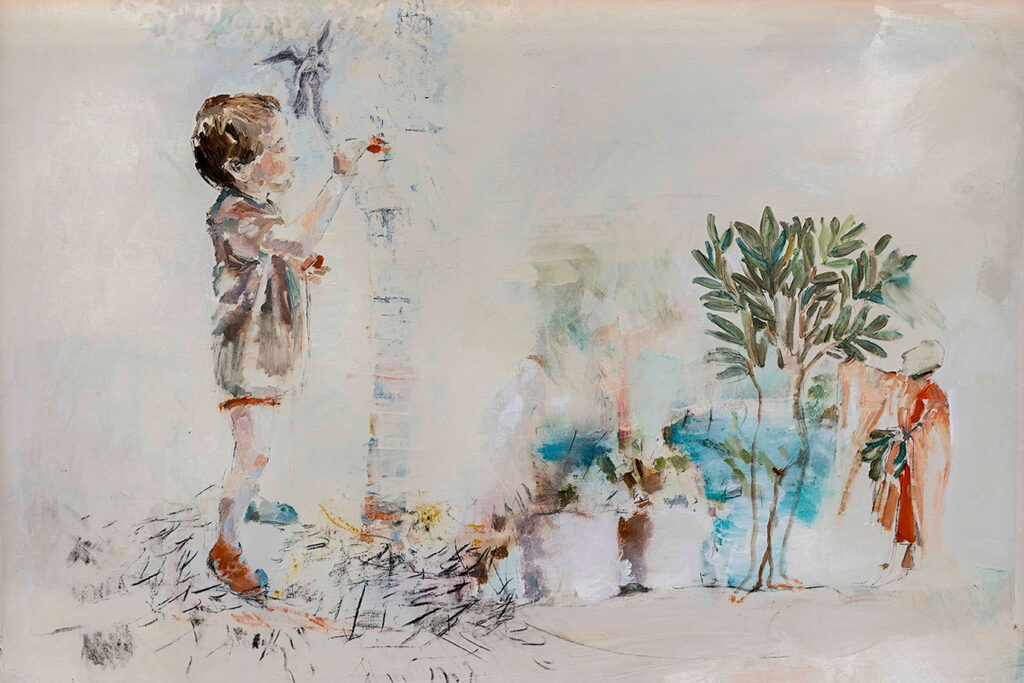
Gloria Loizaga is a painter who reminds us that creation is also a form of revelation.
All images by © Gloria Loizaga, all right reserved. Do not use without the author’s written permission.
Introduction
Between what is seen and what is felt, there is a sacred threshold.
There, art resides not as an object, but as an experience, a living presence that breathes through the soul of the one who creates.In this encounter, we glimpse into the intimate universe of Gloria Loizaga, a painter whose work is not only observed, but listened to with an open heart.
Through her words, as through her brushstrokes, we begin to unravel layers of meaning, memory, and symbol. We let ourselves be guided by questions that do not seek immediate answers, but rather to understand her inner world, echoes from the depths, from the invisible.
Each of her answers is an echo of something deeper, an invisible stroke that invites us to return to the essential: to the gesture that is born from within, to the matter that allows itself to be touched by the spirit.
Thank you Gloria for opening the door to your inner world, for letting us walk with you along the paths where the image is born before it becomes image, and the symbol before it is spoken.
May this interview not be just a reading, but also a seed: an offering for those who come with an awakened heart.
I. Roots of the Creative Soul
Do you remember the first moment when art touched your heart, as if recognizing something deep within it, something you longed to discover?
I remember the first time I became truly aware of what painting stirred in me. It was something I had done since I was a child, all throughout school, but it was at age 16, on a Sunday, while painting Merlin and the Lady of the Lake, that I experienced and, I dare say, something new. Not only was I outside of time, I also felt that slight anxiety that arises during creation, when things are still unmanifested. It was the seed of awareness of the darker side of creation as well.
Is there an echo from your childhood, an artistic seed planted long ago, that later blossomed into a visual language for expressing your emotions?
My father was a lover of books, music, and painting. From an early age, he made me a part of his passions, and I consider that a true blessing. My eye was gradually trained, and more importantly, I developed an affinity for different styles. From a young age, surrealism and images that blurred the line between reality and fantasy completely captivated me. I felt that painting and photography revealed other possible realities and yes, perhaps that seed remained there, silent, waiting for the right moment to grow.
Do you feel that you chose the path of art, or was it art that, silently and wisely, chose you?
Today, I dare say that art chose me. I studied Fine Arts intending to pursue art history and specialize in Eastern art. But I quickly discovered that it was a field where you had to give everything. And although I haven’t always worked professionally in painting alone, the truth is that art colors reality and shapes the way we relate to everything.
II. Echoes and Resonances
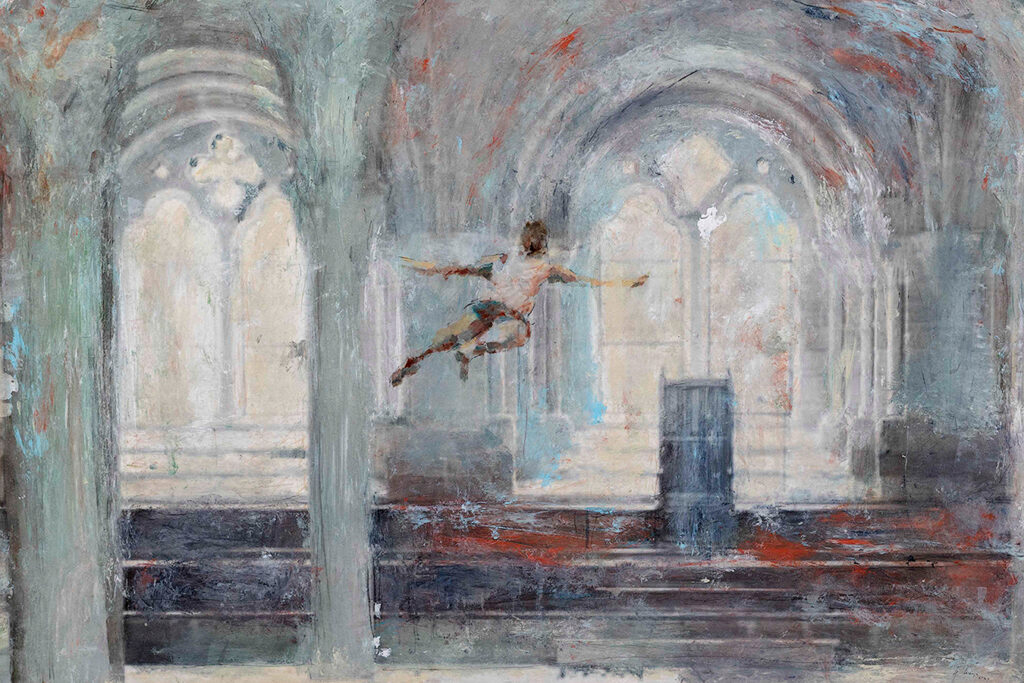
What voices from the past, what whispers of those who walked before you, resonate through your hands when you paint?
Giacometti clearly resonates with his infinite lines that seemed to grasp the idea that we have no defined form, that everything is in motion. Odilon Redon, a symbolist painter, is my artistic reference — his courage to be himself and to paint as he saw and felt, so different from the art world of his time and Van Gogh’s determination indifferent to results and to others’ opinions, remained loyal to painting, called until the end to paint without rest.
What spiritual teachers, beyond the realm of art, have nourished your vision and guided you on the path of contemplation?
The path of contemplation has always been part of my life. It was initially cloaked in transcendental and visualization meditation, more in line with Hindu traditions — perfect for someone with an overflowing imagination and a restless, dense mind. So my teachers are all those who, in a simple and direct way, show that reality is not a limitation for the self.
Beyond the visual, what other languages, like music, dreams, or deep silence, nourish your inner world, that vast symbolic universe you carry within?
Music is a fundamental element in my life. Although silence has a more powerful presence. The echo of emptiness allows the most unexpected and unknown parts of me to surface. At times it creates impatience, It has a very relative tempo, … Music sets the pace of the brushstrokes, while silence is like a waiting without any clear cues.
III. Matter and Mystery
Your works rest on various materials: paper, wood, fabric… How do you connect with the material before it becomes expression?
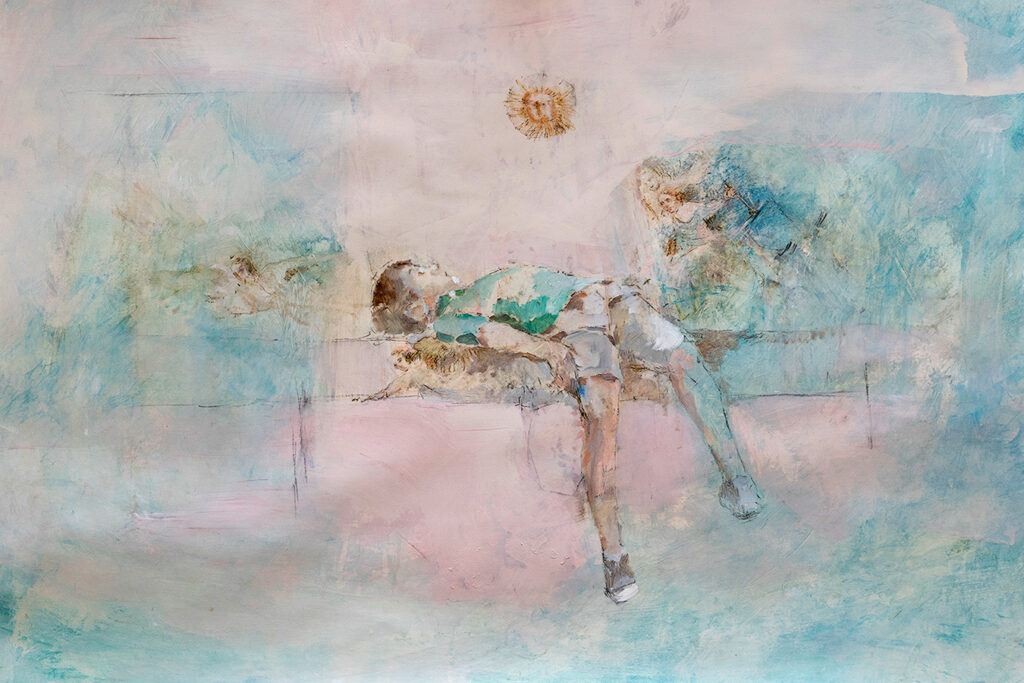
Personally, I’ve always had a constant struggle with matter, as if it were something heavy, annoying, and uncomfortable. No matter how much matter I paint with, it doesn’t seem to settle. Silence and contemplation are repositioning me in relation to the body and matter. Today, I can say that both are sacred to me.
I carefully choose the materials, and at different times, the supports have determined the expression. I often touch and apply the paint with my hands at certain moments, so that light and color merge with the material. I layer elements so that the unexpected can emerge.
Is there an encounter, a dance between the visible and the invisible in that moment before creation?
Without a doubt. It’s not premeditated; I begin to apply, it’s like taking a path and something within me makes me recalculate the route. And I do it like that, unafraid to erase and start over — it’s the only way for the invisible to manifest.
In the mixing of techniques, do you find freedom, alchemy, or perhaps a space of pure contemplation where form dissolves and being emerges?
All of the above. Alchemy would be a perfect definition. It has an experimental quality because of the unexpectedness of the result, including failure.
Your colors are like whispers, like silent prayers. What role does emptiness, dim light, the space between what is and what isn’t, play in your pictorial universe?
The palette is not something I determine; in fact, it changes according to my stage in life. When I choose color, it’s often very different from how it ends up on the canvas. It’s truly astonishing and that’s where the mystery happens. A light appears that not even I can foresee.
IV. Allegory, Symbol, and Spirit
Your work seems to speak from a place beyond the visible, like an echo that resonates in the heart. What does the symbolic mean to you?
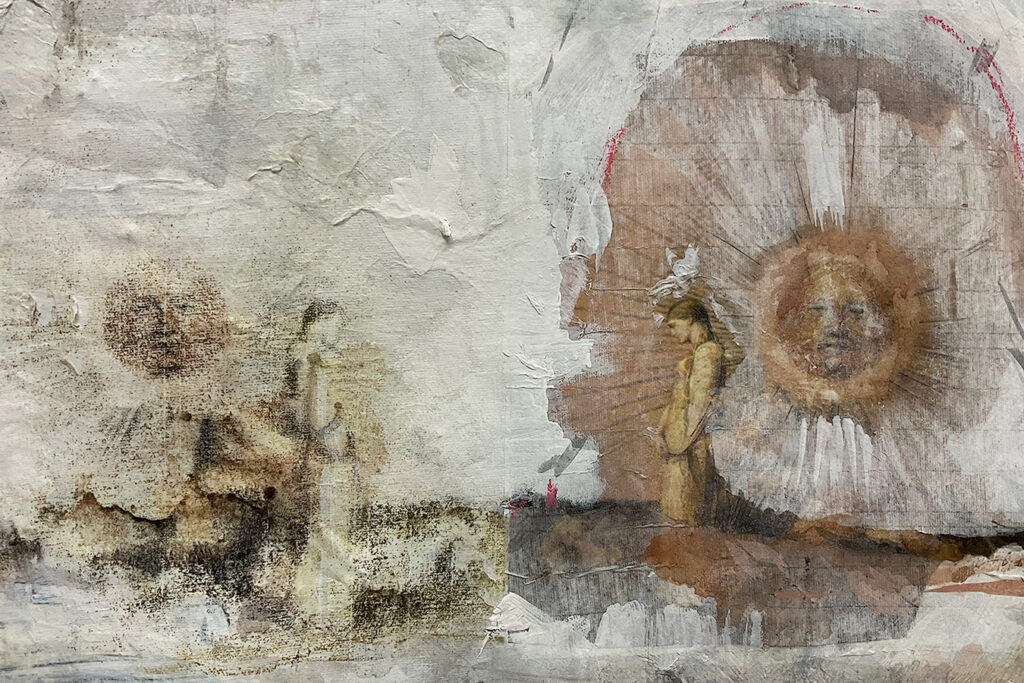
Spirit is my vital energy. That’s where my determination for almost everything in life comes from. And for me, the symbol is a form of transmission that escapes reason, including it, yet transcending it.
The symbols that appear in your paintings do they emerge from within you, or do they seem to come to you, as though they were already waiting to be revealed?
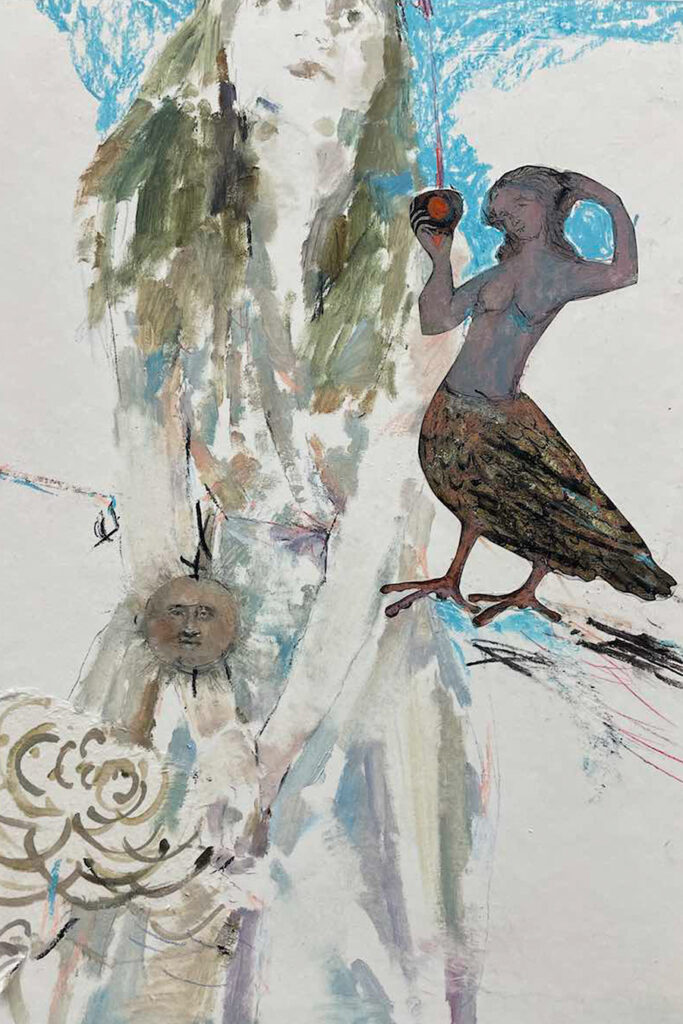
They are images, allegories that emerge from the unconscious. In many cases, they’re inspired by alchemical motifs, and others feel like daydreams elements that reveal themselves, and I feel compelled to give them a voice.
Are you trying to reveal meaning, or do you prefer to let the viewer’s soul find its own path to truth, like a flower blooming in its own time?
I hadn’t thought about it that way. I feel like I cultivate the inner listening that allows something to be transmitted, something that was waiting to be revealed. But I don’t feel like it belongs to me.
The viewer completes the work with their gaze. And the work is something open. I aim to create that space of emptiness that allows each person to see themselves, as if in a mirror.
V. Inner Rhythms
How does a work come to life within you? Is there a moment of stillness, almost sacred, in which everything aligns and the gesture emerges effortlessly?
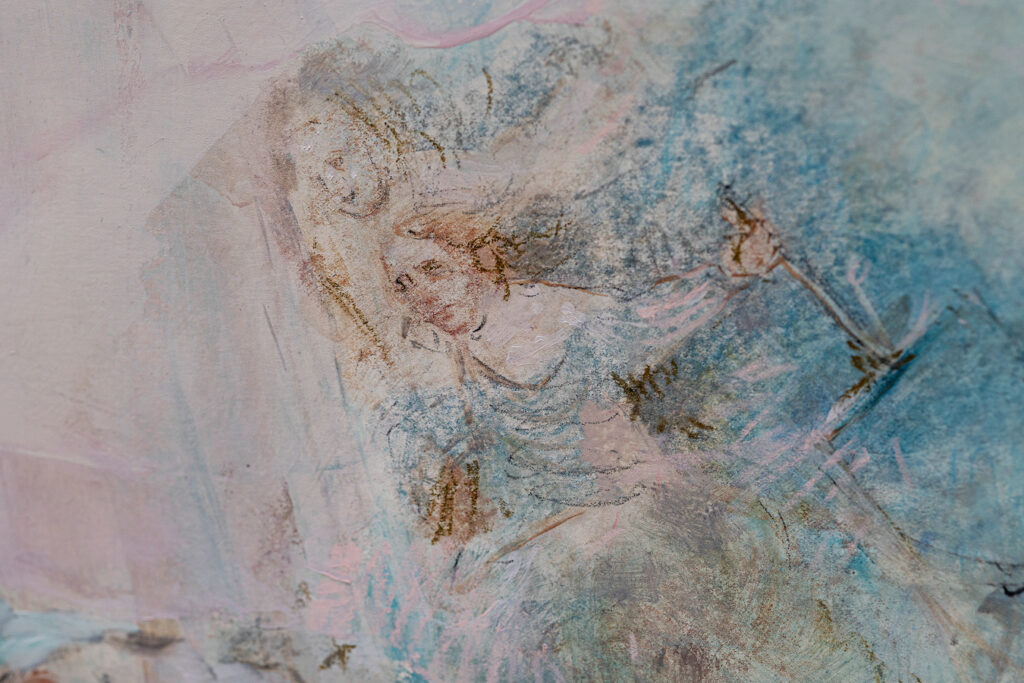
It’s stillness and restlessness in almost equal parts. Dalí said that a painting is either very easy or impossible, and he was absolutely right. When it comes together on the first try, it has a freshness I try not to ruin. It’s hard to know when to stop. Sometimes it’s very clear, but when it’s not, the other option is to take it to the extreme and from that chaos, something new and fresh might emerge… or it might be total rubbish. But you have to take risks. The turning point is whether the work feels alive. I have no problem starting over, no matter how many hours of work it’s taken. I know patching doesn’t lead anywhere it’s better to start from scratch.
Still, I believe everything adds up in painting. The hours are never wasted; they silently accumulate, forming an invisible support filled with eternal content more truthful than many realities.
Is your process more intuition than thought, more listening than action?
It’s a mix. I have to be careful because once I go into action, I can rush and sometimes destroy everything. But you can’t stay behind. You mustn’t be afraid of that chaos. From organized chaos come the best works. Chaos is the creative beginning.
Is it silence that guides your hand, like a silent meditation in which everything is revealed?
Silence gives birth to non-time and true listening. It’s like recharging the battery or quenching your thirst with pure water.
What do you hope to awaken in those who contemplate your work? A deep emotion, a forgotten memory, or a space for silent reflection, for inner awakening?
I hope each person finds what they need that the work is alive and completed by the gaze of each viewer. A mirror of the deepest self, a gentle reality, a place to rest… a doorway to the invisible, to mystery but in a simple and illuminated way.
VI. Open Paths
Do you feel your painting is moving toward new forms, or that it’s becoming increasingly essential, like a return to the deep simplicity of being?
It’s funny just a few days ago, I came across a college assignment that referenced a return to the One. And my intention in painting hasn’t changed much from that time; the difference is that back then it was just a thought, an intuition, and today, thirty years later, I’ve arrived at the same point — but now with a simplicity and authenticity I’ve gained from all these years of coming and going along the path.
If your work were a season in the natural cycle, what season would it be in now? At what point in the journey toward wholeness?
Hopefully, it is a moment of emptying out and letting go of what is no longer needed, in order to fly free and light.
Like a kite, rising high and dipping to the rhythm of the wind.
Closing
And now that words have woven their own space, what remains is silence.
That fertile silence that arrives after something true, like a caress unspoken, yet deeply felt.
We leave with our eyes a little more open, and our hearts touched by something we could not quite name.
Perhaps a color, perhaps a question without an answer… or the echo of an ancient truth that, through your work, begins to bloom again within us.
Thank you, Gloria, for allowing us to dwell in your universe, even if only for a moment.
For showing us that art does not always seek to be understood, but to be felt;
that the deepest things cannot be explained — they are only revealed when the soul is ready to see.